
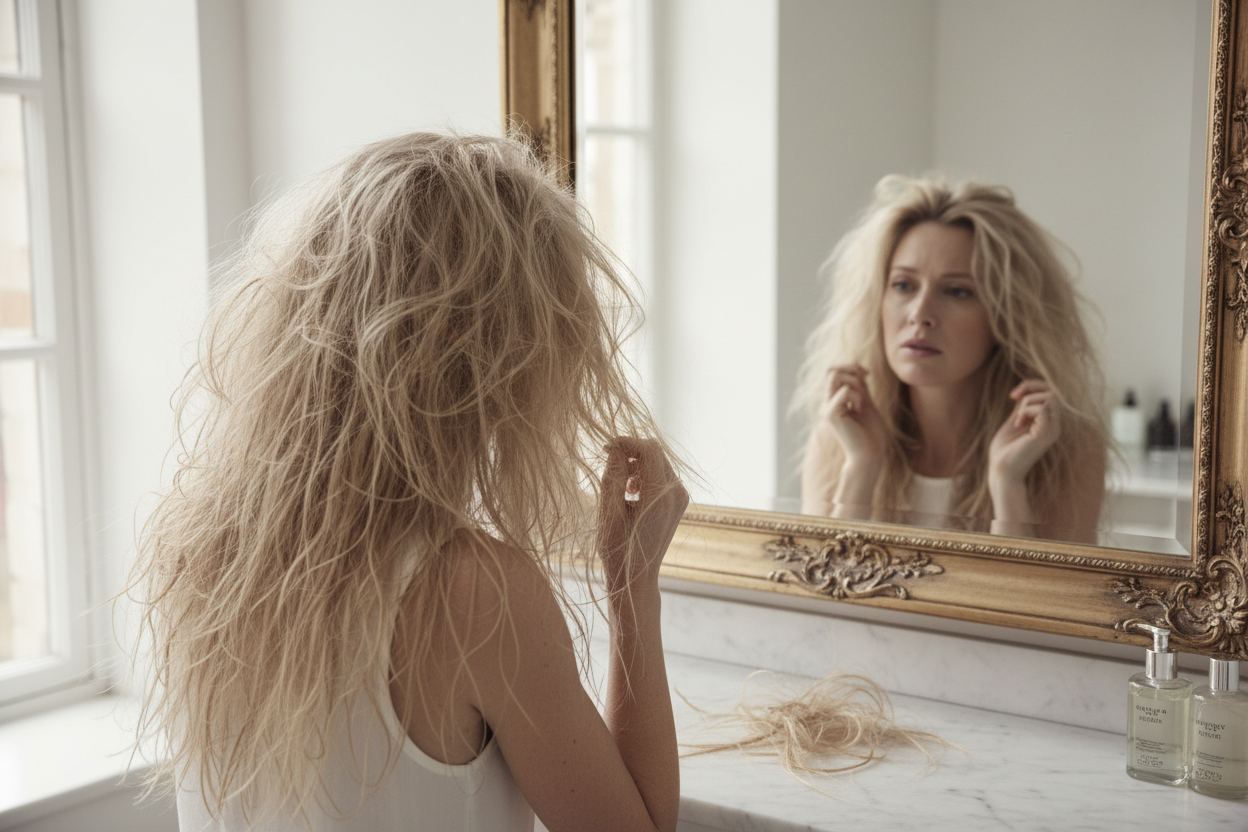
Between fresh colour appointments, blonde transformations, daily blow-dries and regular sessions with the hair straightener, we can put our hair through a lot in the name of looking good.
The problem is that repeated bleaching, colouring and heat styling can eventually take their toll. Hair that was once soft and shiny may start feeling dry, rough or difficult to manage. You might notice more breakage when brushing, split ends appearing faster or strands that simply don't feel as strong as they used to.
So, how do you repair damaged hair?
While severely damaged hair can't simply return to its original condition overnight, the right haircare routine can make a significant difference. By combining targeted hair repair treatments with better washing, conditioning and styling habits, you can help strengthen vulnerable strands, reduce breakage, restore moisture and improve how your hair looks and feels.
In this guide, we'll explore what causes hair damage, how to recognise the warning signs and the steps you can take to build a healthier haircare routine using professional products from brands such as NAK Hair.
How Can You Tell If Your Hair Is Damaged?

Hair damage doesn't always happen overnight. It often develops gradually after months or years of colouring, bleaching and styling.
Common signs of damaged hair include:
- Excessive dryness
- Split or frayed ends
- Increased breakage
- Hair snapping when brushed
- Frizz and flyaways
- Rough or straw-like texture
- Loss of natural shine
- Excessive tangling
- Reduced elasticity
- Hair that feels unusually stretchy or "gummy" when wet
You may experience several of these signs at the same time, particularly if your hair has undergone repeated chemical services. Understanding what caused the damage is an important first step towards choosing the right damaged hair treatment.
What Causes Hair Damage?

Your hair can become damaged for many reasons, but three of the most common culprits are bleaching, chemical colouring and excessive heat styling.
Bleaching
Bleaching is one of the most intensive chemical processes your hair can undergo.
To lighten the hair, bleach alters its structure so that natural or artificial pigment can be removed. When performed correctly, professional bleaching can create beautiful results. However, repeated processing, overlapping bleach applications or excessive lightening can leave hair more vulnerable.
Bleach-damaged hair may become:
- Dry
- Porous
- Brittle
- Prone to breakage
- Difficult to detangle
If you're wondering how to repair bleach-damaged hair, the answer usually involves a combination of strengthening, hydration, reduced chemical processing and better protection against future damage.
Colouring and Chemical Treatments
Permanent hair colour and other chemical treatments can also affect the condition of your hair over time.
Repeated chemical processing may contribute to moisture loss and increased porosity, particularly if the hair is already compromised.
That doesn't mean you necessarily have to stop colouring your hair. Instead, your routine should account for the additional care that chemically treated hair may require.
Using professional hair colour products designed for coloured and damaged hair can help maintain moisture, improve manageability and protect your colour between salon appointments.
Heat Styling
Hair straighteners, curling irons, hot brushes and blow dryers make everyday styling easier, but repeated exposure to high temperatures can contribute to hair damage. Excessive heat can cause moisture loss and leave the hair feeling:
- Dry
- Brittle
- Rough
- Frizzy
The risk increases when styling tools are used at unnecessarily high temperatures or repeatedly passed over the same section of hair.
Can Damaged Hair Actually Be Repaired?
This is where it's important to have realistic expectations. Hair fibres aren't living tissue, which means severely damaged sections of hair cannot biologically regenerate in the same way that your skin can heal a cut.
However, the right products and routine can significantly improve the condition, strength and appearance of damaged hair.
Professional hair repair treatments can help:
- Strengthen vulnerable strands
- Improve moisture balance
- Reduce future breakage
- Smooth the hair cuticle
- Improve softness
- Restore shine
- Improve manageability
- Protect against further damage
Modern haircare technology has also introduced increasingly advanced approaches to hair repair, including protein, bond-building and peptide-powered formulations designed specifically for compromised hair.
The goal isn't to promise that years of damage will disappear instantly. Instead, it's about improving the condition of your existing hair, preventing further damage, and supporting healthier new growth.
How to Repair Damaged Hair
Repairing damaged hair requires more than adding a single product to your bathroom shelf. The best approach is to look at your entire routine.
1. Switch to a Shampoo Designed for Damaged Hair
Your haircare routine starts with cleansing. If your hair is already dry or compromised, using a shampoo that leaves it feeling stripped can make the problem worse.
Look for a professional shampoo formulated for damaged or chemically treated hair. The goal should be to cleanse effectively while supporting moisture and manageability.
NAK Hair offers professional shampoos designed for different hair concerns, making it easier to create a routine suited to your hair's current condition.
Explore the complete NAK Hair collection at Hair & Beauty Kingdom to find products suited to your individual hair needs.
2. Don't Skip Conditioner
If your hair is damaged, conditioner shouldn't be optional. Damaged and porous hair can struggle to retain moisture, contributing to roughness, tangling and frizz. Regular conditioning can help improve:
- Softness
- Detangling
- Manageability
- Smoothness
- Shine
For the best results, consider pairing your shampoo with a conditioner from the same professional haircare system.
3. Introduce a Targeted Hair Repair Treatment
If bleaching, colouring or heat styling is a regular part of your routine, you may benefit from introducing a targeted repair treatment. This is where advanced haircare products such as NAK Hair's K.REVIVE range can fit into a damaged hair routine.
K.REVIVE is designed with hair repair in mind, making it particularly relevant for hair affected by chemical services, bleaching and heat styling.
Rather than waiting until your hair becomes severely compromised, incorporating targeted repair products into your regular routine can help support vulnerable strands and maintain healthier-looking hair.
4. Use a Weekly Hair Mask
Conditioner and hair masks perform different roles in your routine. Your regular conditioner supports daily softness and manageability, while a deep-conditioning hair mask provides a more intensive treatment.
A quality hair mask for damaged hair can help:
- Improve moisture
- Reduce dryness
- Improve softness
- Enhance shine
- Make hair easier to manage
Depending on your hair type and condition, consider incorporating a nourishing mask once a week.
5. Reduce Excessive Heat Where Possible
We're not going to tell you to throw away your hair straightener. For most people, that's simply unrealistic. Instead, think about how you're using your styling tools.
Try to:
- Use the lowest effective temperature
- Avoid repeatedly passing a straightener over the same section
- Allow hair to partially air dry before blow drying when practical
- Avoid heat styling unnecessarily
- Invest in professional-quality styling tools with reliable temperature control
Small changes to your styling habits can reduce unnecessary exposure to high temperatures.
6. Always Use Heat Protection
If you regularly blow-dry, straighten or curl your hair, heat protection should become a non-negotiable part of your routine.
Apply an appropriate heat protectant before using:
- Hair dryers
- Hair straighteners
- Curling irons
- Hot brushes
Think of heat protection as prevention rather than repair. It's much easier to minimise future damage than continually try to manage the effects of excessive heat exposure.
7. Be Gentle with Wet Hair
Hair can be particularly vulnerable when wet, especially when it is already damaged. Avoid aggressively brushing through knots or rubbing your hair with a towel.
Instead:
- Gently remove excess water
- Use an appropriate detangling brush or wide-tooth comb
- Work through tangles gradually
- Start detangling from the ends
- Avoid pulling or stretching the hair
These small habits can help minimise unnecessary mechanical breakage.
8. Get Regular Trims
Haircare products can dramatically improve the appearance and manageability of damaged hair, but they can't permanently fuse severely split ends back together.
Regular trims help remove damaged ends before splitting travels further up the hair shaft. If your ends are severely compromised, removing a small amount of length can often make your overall hair look immediately healthier and fuller.
Protein vs Moisture: What Does Damaged Hair Need?
Not all damaged hair needs exactly the same treatment. Some hair primarily lacks moisture, while other hair may be structurally compromised from chemical processing. It's an ongoing balance of protein and moisture.
Hair that needs more moisture may feel:
- Dry
- Rough
- Frizzy
- Dull
More severely compromised hair may experience:
- Increased breakage
- Weakness
- Poor elasticity
- Excessive stretching when wet
The key is finding the right balance between strengthening and hydration. Too much of one approach without considering the other may not deliver the results your hair needs.
A professional hairdresser can help assess your hair and recommend a routine based on its current condition.

How Long Does It Take to Repair Damaged Hair?
There's no universal timeline for improving damaged hair. It depends on:
- How severe the damage is
- What caused it
- Your hair length
- Your chemical treatment history
- Your styling habits
- The products you use
- Whether the damaging practices continue
You may notice improvements in softness, shine and manageability relatively quickly after changing your routine. However, growing out severely compromised hair takes considerably longer.
Consistency matters. A good routine followed for months will generally achieve more than an intensive treatment used once and then forgotten.
How to Prevent Further Hair Damage
Once you start improving your haircare routine, protecting your progress becomes just as important. To help prevent further damage:
- Always use heat protection
- Avoid unnecessarily high styling temperatures
- Minimise overlapping bleach applications
- Space out chemical services where appropriate
- Use professional products suited to your hair type
- Condition regularly
- Incorporate targeted repair treatments
- Protect your hair when swimming
- Be gentle when detangling
- Schedule regular trims
The best approach combines repair and prevention.
Build a Damaged Hair Routine with NAK Hair
If you're unsure where to start, building your routine step by step can make choosing products easier.
- Cleanse: Choose a professional NAK shampoo suited to damaged, dry or chemically treated hair.
- Condition: Follow with a complementary conditioner to support moisture, softness and manageability.
- Repair: Introduce a targeted repair treatment, such as products from the NAK K.REVIVE range, to support hair affected by bleaching, colouring and heat.
- Hydrate: Use a nourishing hair mask regularly to help maintain moisture and softness.
- Protect: Apply appropriate heat protection before blow-drying or using hot styling tools.
- Style: Choose professional styling products to achieve your desired finish without compromising your haircare routine.
From everyday shampoo and conditioner to targeted treatments and styling essentials, explore the complete NAK Hair collection at Hair & Beauty Kingdom and build a professional haircare routine around your individual needs. For more information, contact our friendly team today.
Frequently Asked Questions on How to Repair Damaged Hair
Can damaged hair be repaired?
While severely damaged hair cannot biologically regenerate, professional haircare products and better styling habits can significantly improve its strength, appearance, softness and manageability while helping prevent further damage.
How do you repair bleach-damaged hair?
Focus on a combination of strengthening treatments, moisture, gentle cleansing, conditioning and reduced heat exposure. Avoid overlapping bleach applications and seek professional advice if your hair is severely compromised.
What is the best treatment for damaged hair?
The best damaged hair treatment depends on the type and severity of damage. Hair affected by bleaching or chemical processing may benefit from targeted repair treatments alongside hydrating shampoo, conditioner and masks.
How can I repair heat-damaged hair?
Reduce unnecessary heat exposure, lower your styling temperature, always use heat protection and introduce products designed to support damaged and dry hair.
How long does damaged hair take to repair?
Improvements in softness and manageability may be noticeable relatively quickly, but severely damaged hair may need to grow out over time. Your results will depend on the extent of the damage and your ongoing routine.
Should I use protein or moisture on damaged hair?
It depends on your hair's condition. Dry, rough hair may need additional moisture, while hair experiencing significant weakness and breakage may benefit from strengthening treatments. Many damaged hair routines incorporate a balance of both.
Can I continue colouring my hair if it's damaged?
This depends on the severity of the damage. If your hair is significantly compromised, consult a professional hairdresser before undergoing further bleaching or chemical colouring. Giving your hair time between chemical services may also help reduce further damage.