
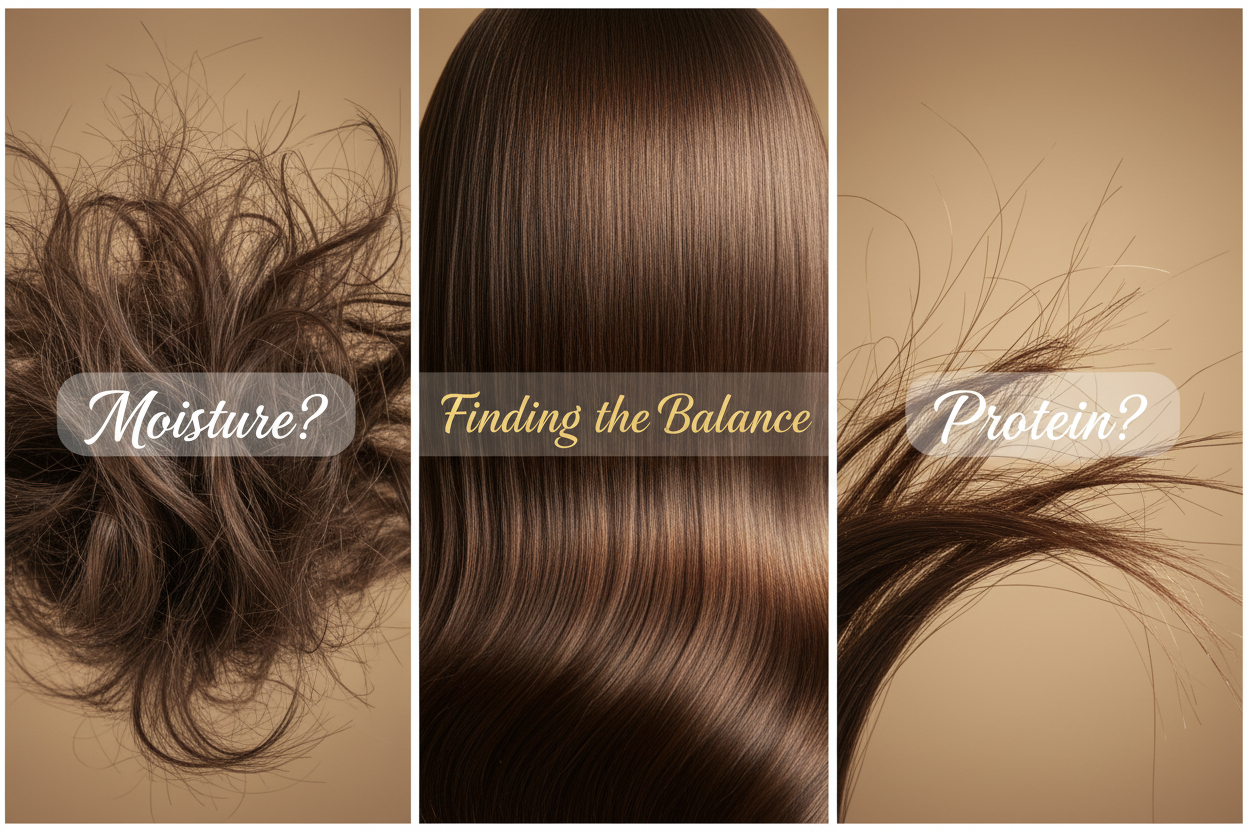
Protein vs Moisture for Hair: What Does Your Hair Actually Need?
Your hair feels dry, frizzy, weak or difficult to manage, so you reach for the richest hair mask you can find. But what if moisture isn't actually what your hair needs?
One of the biggest challenges when building a haircare routine is understanding the difference between hair that needs more moisture and hair that may benefit from strengthening support. The symptoms can sometimes look similar, but choosing the right products can make a significant difference to how your hair looks and feels.
Healthy-looking hair requires a balance between strength and hydration. Depending on your hair type, chemical history and styling routine, you may benefit from protein, moisture or a combination of both.
So, does your hair need protein or moisture?
In this guide, we'll explore the signs to look for, explain how protein and moisture treatments differ, and help you build a balanced haircare routine using professional products from brands such as NAK Hair.
Why Does Hair Need Protein and Moisture?
Before deciding between protein vs moisture for hair, it helps to understand the different roles they play.
Your hair needs both strength and flexibility to look and feel its best.
Protein Supports Strength and Structure
Hair is primarily composed of a protein called keratin. Chemical treatments and everyday styling can affect the structure and condition of the hair over time.
Common causes of damage include:
- Bleaching
- Permanent colouring
- Chemical treatments
- Excessive heat styling
- Repeated use of high-temperature styling tools
- Environmental exposure
Protein-based and strengthening treatments are designed to support vulnerable or compromised hair and improve how it looks and feels. Depending on their formulation, these treatments may contain ingredients such as proteins, amino acids or peptides.
Moisture Supports Hydration and Flexibility
Moisture plays a different role. Well-conditioned hair generally feels softer, smoother and more manageable. When hair lacks adequate moisture, it can become dry, rough and increasingly difficult to control.
Hair that needs additional moisture may experience:
- Dryness
- Frizz
- Rough texture
- Dullness
- Tangling
- Reduced softness
The goal of a superior haircare routine isn't necessarily choosing protein or moisture and sticking with it forever. It's about finding the right balance for your hair at any given time.

Does My Hair Need Protein or Moisture?
This is the question most people struggle to answer. The condition of your hair can provide clues about what your routine may be missing.
While there isn't a perfect at-home test that can diagnose exactly what every strand needs, there are some common signs worth looking for.
Signs Your Hair May Need Protein
Hair that has undergone significant chemical or physical stress may benefit from strengthening support. Signs can include:
- Increased breakage
- Weak-feeling strands
- Poor elasticity
- Hair that stretches excessively when wet
- Hair that snaps easily
- Loss of structure
- Damage following bleaching
- Damage following repeated chemical processing
Bleaching is particularly relevant because repeatedly lightening the hair can leave strands more porous and vulnerable to breakage.
If your hair is breaking, snapping or feeling significantly weaker following chemical services, introducing an appropriate strengthening or repair treatment may help improve its condition and manageability.
For more advice on managing compromised hair, read our guide to repairing damaged hair from bleaching, colouring and heat styling.
Signs Your Hair May Need Moisture
Hair that primarily lacks moisture often looks and feels different. Common signs include:
- Dryness
- Rough texture
- Frizz
- Dullness
- Excessive tangling
- Lack of softness
- Brittle-feeling ends
- Hair that feels difficult to manage
Several factors can contribute to dry hair, including frequent washing, environmental exposure, excessive heat styling and using products that aren't well suited to your hair type.
A moisture-focused routine aims to improve softness, smoothness and manageability through appropriate shampoos, conditioners, masks and leave-in products.
Protein vs Moisture for Hair: A Quick Comparison
Still unsure what your hair needs? This quick guide can help you identify where to start.
|
If Your Hair Feels... |
It May Benefit From... |
|
Weak |
Protein or strengthening support |
|
Overly stretchy when wet |
Protein or strengthening support |
|
Prone to breakage |
Protein or strengthening support |
|
Damaged from bleaching |
Protein + Moisture |
|
Dry |
Moisture |
|
Rough |
Moisture |
|
Frizzy |
Moisture |
|
Difficult to detangle |
Moisture |
|
Chemically damaged |
Protein + Moisture |
|
Dry and brittle |
A balanced routine |
This table should be used as a general guide rather than a diagnosis. Severely compromised or chemically damaged hair should ideally be assessed by a professional hairdresser.
Does Damaged Hair Need Protein or Moisture?
In many cases, the answer is both. Damaged hair doesn't necessarily have just one problem.
Consider heavily bleached hair as an example. The hair may be structurally compromised from repeated chemical processing while simultaneously experiencing significant dryness and moisture loss. In this situation, focusing entirely on hydration may improve softness but may not address the hair's need for strengthening support.
On the other hand, continually using strengthening products while ignoring moisture may leave some hair feeling stiff, rough or difficult to manage.
A balanced routine may therefore combine:
- Gentle cleansing
- Regular conditioning
- Targeted repair treatments
- Hydrating masks
- Leave-in products
- Heat protection
The right balance depends on the current condition of your hair.
What Is a Protein Treatment for Hair?
A protein treatment for hair is generally designed to support strands that have become weak or compromised. Depending on the product, strengthening treatments may contain ingredients such as:
- Keratin
- Hydrolysed proteins
- Amino acids
- Peptides
These products aren't capable of making severely damaged hair biologically regenerate. However, modern professional formulations can help improve the feel and appearance of vulnerable hair while supporting strength, manageability and resilience.
A hair protein treatment may be particularly relevant for hair affected by:
- Bleaching
- Repeated colouring
- Chemical processing
- Excessive heat styling
Rather than waiting until hair becomes severely damaged, introducing targeted repair products alongside good everyday haircare habits can help maintain healthier-looking hair over time.
What Is a Moisture Treatment for Hair?
A moisture treatment focuses primarily on improving hydration, softness and manageability. Depending on your hair type, a moisture-focused routine might include:
- Hydrating shampoo
- Moisturising conditioner
- Deep-conditioning hair mask
- Leave-in conditioner
- Hair oils or serums
A moisturising treatment for hair can be particularly beneficial when your strands feel dry, rough, frizzy or difficult to detangle. Hair masks can also provide a more intensive conditioning step than your everyday conditioner.
If your hair regularly feels dry, incorporating a moisturising hair mask into your weekly routine may help improve softness and manageability.
Professional haircare brands such as NAK Hair offer different product ranges designed around individual hair concerns, allowing you to tailor your routine rather than taking a one-size-fits-all approach.
Can You Have Too Much Protein in Your Hair?
Yes, it is possible to overuse protein or strengthening treatments. More isn't always better.
Some hair may begin to feel:
- Stiff
- Rough
- Dry
- Brittle
- Less flexible
If strengthening products are used too frequently without enough conditioning and moisture support. This doesn't necessarily mean you need to permanently stop using protein-based products.
Instead, consider:
- How frequently you're using treatments
- How many strengthening products are in your routine
- Whether your hair also needs additional hydration
- Whether the treatment is appropriate for your hair type
If you're unsure, a professional hairdresser can help assess your hair and recommend an appropriate treatment frequency.
Can Hair Have Too Much Moisture?
Balance matters on the other side of the equation too. Hair that receives intensive conditioning and moisture-focused treatments without appropriate strengthening support may sometimes begin to feel overly soft, limp or difficult to style.
You might notice:
- Reduced body
- Hair feeling excessively soft
- Difficulty holding a style
- Increased stretchiness when wet
This is another reason why it's important to pay attention to how your hair responds to your routine rather than automatically adding more treatments. Your hair's needs can also change.
The routine that works immediately after a major blonde transformation may not be the same routine your hair needs six months later.
How to Balance Protein and Moisture in Your Hair Routine
Finding the right protein-to-moisture balance doesn't have to be complicated. Start by looking at your current hair condition and building your routine around your most noticeable concerns.
Step 1: Assess Your Hair
Pay attention to how your hair behaves. Is it:
- Dry?
- Frizzy?
- Rough?
- Weak?
- Breaking?
- Excessively stretchy?
These signs can help determine where to focus your routine.
Step 2: Choose the Right Shampoo
Start with a professional shampoo designed for your primary hair concern.
If your hair is dry, look for products focused on moisture and hydration. If your hair is significantly compromised, consider products designed specifically for damaged or chemically treated hair.
Step 3: Condition Regularly
Conditioning is important for maintaining softness, smoothness and manageability. Choose a conditioner that complements your shampoo and suits your hair's current needs.
Step 4: Introduce Targeted Treatments
This is where you can customise your routine. Depending on your hair, you might introduce:
- A strengthening treatment
- A repair treatment
- A hydrating hair mask
You may find that alternating different treatments works better than repeatedly using the same one.
Step 5: Protect Against Further Damage
Repair treatments can only do so much if you continue exposing your hair to unnecessary damage. Help protect your hair by:
- Using heat protection
- Reducing excessive styling temperatures
- Avoiding repeated passes with straighteners
- Being gentle when detangling
- Spacing out chemical services where appropriate
Step 6: Reassess Your Hair Regularly
Your haircare routine shouldn't necessarily remain unchanged forever. Hair needs can evolve based on:
- Seasonal changes
- Colour services
- Bleaching
- Heat styling
- Hair length
- Lifestyle
Regularly reassess how your hair feels and adjust your routine accordingly.

Protein vs Moisture: Finding the Right Balance for Your Hair
So, does your hair need protein or moisture?
The answer depends entirely on its current condition.
If your hair feels dry, rough and frizzy, additional moisture may be your priority. If it feels weak, excessively stretchy or prone to breakage following chemical processing, strengthening support may be more appropriate.
And if your hair is both dry and damaged? You may need a combination of both.
The most effective haircare routines aren't static. They change as your hair changes.
Pay attention to how your hair looks, feels and behaves, then adjust your products accordingly. By finding the right balance between strengthening, hydration and protection, you can build a routine that supports smoother, stronger and healthier-looking hair. If you would like to learn more, please feel free to contact our team today.
Frequently Asked Questions on Protein & Moisturiser for Your Hair
How do I know if my hair needs protein or moisture?
Hair that feels weak, breaks easily or stretches excessively when wet may benefit from strengthening support. Hair that feels dry, rough, frizzy or difficult to detangle may benefit from additional moisture.
Does dry hair need protein or moisture?
Dry hair often benefits from moisture-focused products, though dryness can also accompany structural damage. Consider your hair's overall condition and chemical history when choosing treatments.
Does damaged hair need protein or moisture?
Damaged hair may need both. Chemically processed hair, for example, can experience structural weakness as well as moisture loss, making a balanced routine beneficial.
How often should you use a protein treatment?
The appropriate frequency depends on your hair type, condition and the specific product being used. Always follow the manufacturer's instructions and avoid overusing intensive treatments.
Can you use protein and moisture treatments together?
Yes. Many haircare routines combine strengthening treatments with moisturising conditioners and masks to support both resilience and hydration.
What does too much protein do to hair?
Overusing protein or strengthening products may cause some hair to feel stiff, rough, dry or brittle. Adjusting treatment frequency and incorporating appropriate moisture may help restore balance.
Does bleached hair need protein?
Bleached hair may benefit from strengthening support because chemical lightening can compromise the hair structure. However, bleached hair is often dry as well, meaning a combination of repair and moisture-focused products may be appropriate.