
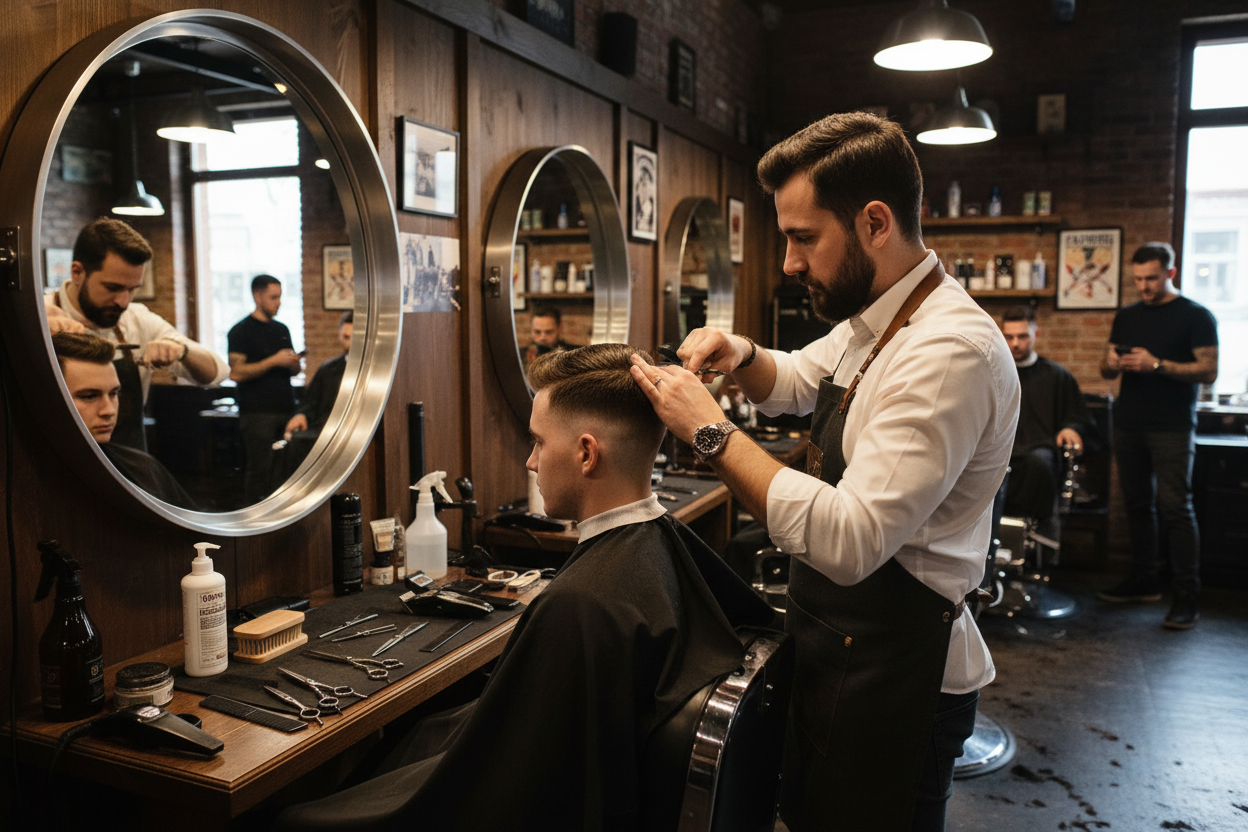
Every barber wants to become faster.
Not because they want to rush clients through the chair, but because greater efficiency allows you to see more clients, reduce fatigue, stay on schedule and increase your earning potential, all while maintaining the standard of work your reputation is built on.
The reality is that the fastest barbers aren't necessarily the most talented. They're often the most organised.
They've refined every part of their workflow, from the consultation through to the final mirror check. They know exactly where every tool is, when to switch between clippers and trimmers, and how to eliminate unnecessary movements that waste valuable time.
If you're looking to complete cleaner haircuts more efficiently without compromising quality, these professional workflow tips will help you work smarter (not harder).
Why Speed Doesn't Mean Rushing
One of the biggest misconceptions in barbering is that speed comes from working faster. In reality, speed comes from making fewer mistakes.
Professional barbers don't rush through haircuts. Instead, they develop systems that remove unnecessary decisions and wasted movements.
Every haircut follows a familiar sequence, allowing them to work with confidence and consistency.
Working smarter means:
- Spending less time correcting mistakes
- Making fewer unnecessary passes
- Moving confidently between techniques
- Following the same proven process every time
When your workflow becomes second nature, you'll naturally complete haircuts more efficiently while delivering even better results.
Start Every Haircut with a Better Consultation
Many delays begin before the clippers even leave the bench. A rushed consultation often leads to uncertainty halfway through the haircut.
Professional barbers know that spending an extra minute asking the right questions can save ten minutes of corrections later.
Before you begin, confirm:
- Desired haircut
- Fade height
- Skin fade or taper
- Length on top
- Beard work required
- Styling preferences
- Reference photos if available
Clear communication prevents misunderstandings and avoids the need to make major changes once you've already started cutting.
Build a Repeatable Haircut Workflow
One habit shared by experienced barbers is consistency. Rather than approaching every haircut differently, they follow the same structured sequence every time.
A typical workflow might look like:
- Consultation
- Section the haircut
- Remove bulk weight
- Establish fade guidelines
- Blend each section
- Cross-check the fade
- Detail with the trimmer
- Style and finish
- Final client check
Following a repeatable system reduces hesitation and builds muscle memory. The less time you spend deciding what comes next, the faster (and more confidently) you'll work.
Sectioning Saves More Time Than You Think
Many barbers skip proper sectioning because it feels like an unnecessary step. Ironically, poor sectioning usually creates more work later.
Clearly dividing the haircut into manageable areas helps you:
- Stay organised
- Blend more consistently
- Avoid overworking sections
- Reduce backtracking
- Maintain balance across both sides
Sectioning also allows you to focus on one task at a time rather than jumping between different areas of the haircut. The result is cleaner work completed in less time.
Organise Your Guards Before Every Client
One of the simplest ways to improve efficiency is to eliminate unnecessary searching. If you're constantly looking for the next guard, you're interrupting your rhythm. So, before every appointment:
- Arrange guards in numerical order.
- Place your most-used guards closest to you.
- Ensure every guard has a designated position.
- Return each guard immediately after use.
These small habits might only save a few seconds per haircut, but over the course of a full day, they can make a significant difference.

Keep Your Tools Within Easy Reach
Every unnecessary movement slows you down. Professional barber stations are designed so everything sits within comfortable reach.
Think about where you place:
The fewer steps you take during a haircut, the more smoothly your appointments will flow. Many experienced barbers periodically review their workstation and adjust layouts to remove wasted movement.
Reduce Unnecessary Tool Switching
Switching constantly between tools interrupts your rhythm. Rather than alternating between clippers and trimmers every few minutes, complete one stage before moving to the next.
For example:
- Complete bulk removal.
- Build the fade.
- Cross-check.
- Switch to the trimmer for detailing.
- Finish with scissors or styling.
Working in clearly defined stages creates a smoother, more efficient workflow.
Lightweight, Balanced Clippers Reduce Fatigue
As appointment numbers increase throughout the day, even small differences in clipper design become noticeable. Heavy or poorly balanced clippers contribute to:
- Wrist fatigue
- Forearm tension
- Reduced precision
- Slower movements
Modern professional clippers are designed with ergonomics in mind.
For example, the TUFT Viper Clipper combines a lightweight design with a high-performance brushless motor, helping maintain consistent cutting performance while reducing fatigue during long days behind the chair.
Better-balanced equipment allows you to maintain the same cutting quality from your first client through to your last.
Improve Your Lighting
Sometimes the problem isn't your technique; it's what you can't see.
Poor lighting hides imperfections that later require additional blending.
Bright, even lighting allows you to identify:
- Weight lines
- Uneven transitions
- Missed hairs
- Inconsistent texture
Professional barbers often combine:
- Overhead LED lighting
- Large mirrors
- Natural light where possible
Good lighting reduces guesswork and minimises the need for repeated corrections.

Stop Chasing Perfection
Many experienced barbers lose valuable time trying to remove imperfections that clients will never notice.
There's a difference between producing exceptional work and overworking a haircut.
Ask yourself:
- Is the haircut balanced?
- Does the fade transition smoothly?
- Does the client look and feel great?
If the answer is yes, it may be time to move on.
Learning when to stop is an underrated skill that improves efficiency without reducing quality.
Maintain Your Clippers for Consistent Performance
Even the best technique can be slowed down by poorly maintained equipment.
Dull blades, inconsistent motor performance and dirty clippers require more passes to achieve the same result.
To keep your equipment performing at its best:
- Clean blades after every client.
- Remove loose hair regularly.
- Apply blade oil as recommended.
- Charge cordless tools properly.
- Replace worn blades when necessary.
Well-maintained equipment cuts more efficiently, allowing you to complete haircuts faster while producing cleaner finishes.
Review Your Workflow Every Month
One of the habits that separates good barbers from exceptional ones is continuous improvement.
Take time to analyse your own workflow.
Ask yourself:
- Where do I lose the most time?
- Which movements are unnecessary?
- Am I reaching too far for tools?
- Am I making too many corrective passes?
- Could my workstation be better organised?
Recording yourself during a haircut can reveal habits you don't even realise you have.
Small, consistent improvements can dramatically increase productivity over time.
Better Workflow Creates Better Barbers
The most successful barbers aren't simply faster; they're more efficient. They've refined every stage of the haircut until unnecessary movements disappear.
By improving your consultation, organising your workstation, developing a repeatable workflow and maintaining quality equipment, you'll naturally increase your speed without sacrificing the standards your clients expect.
Remember:
Faster haircuts aren't about cutting corners.
They're about removing wasted time.
When your workflow becomes second nature, you'll spend less time correcting mistakes, reduce physical fatigue and deliver consistently excellent results to every client who sits in your chair.
Improve Your Workflow with TUFT Professional Tools
Professional technique will always be the most important factor behind a great haircut, but having reliable equipment makes that technique easier to execute consistently.
Hair & Beauty Kingdom stocks a wide range of TUFT Professional barber tools, including the TUFT Viper Clipper, TUFT Viper Trimmer, professional cordless clippers and barber kits trusted by Australian barbers, apprentices and salon professionals.
Whether you're looking to improve efficiency, reduce fatigue or upgrade your current setup, investing in quality tools can help support a smoother, more productive workflow behind the chair.
Explore the TUFT range and discover equipment designed to meet the demands of modern barbering.
Frequently Asked Questions
How can I cut hair faster without rushing?
The key is to improve your workflow rather than move faster. A consistent consultation, an organised workstation, and a repeatable haircut sequence help reduce wasted time while maintaining quality.
How long should a professional barber haircut take?
The exact time depends on the service, but experienced barbers often complete standard cuts efficiently by following a structured workflow and avoiding unnecessary corrections.
Does better equipment improve haircut speed?
Quality clippers and trimmers with reliable motors, sharp blades, and ergonomic designs can improve efficiency by reducing the need for repeated passes and helping deliver more consistent results.
How should I organise my barber workstation?
Keep your most frequently used tools within easy reach, arrange clipper guards in order and ensure every item has a consistent place. A well-organised station reduces unnecessary movement throughout the day.
Should I use a clipper or trimmer first?
Most barbers complete most of the haircut with clippers before switching to a trimmer for outlining, detailing, and finishing.
Why do experienced barbers seem so much faster?
Experienced barbers rely on systems rather than speed. They follow a consistent workflow, minimise unnecessary movements and use equipment they trust, allowing them to produce high-quality haircuts efficiently.